
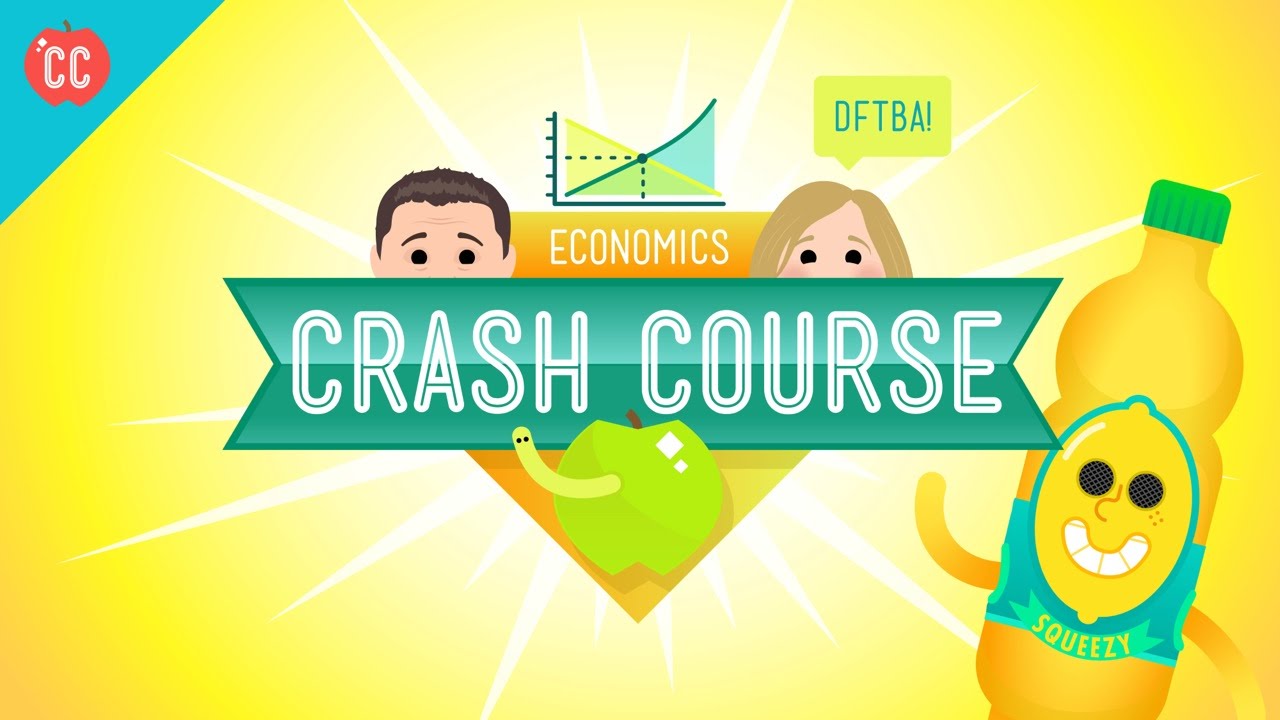
In 35 episodes, Adriene Hill and Jacob Clifford teach you economics! This course is based on introductory college level curriculum and the 2015 AP Economics guidelines. By the end of this course, you will be able to: *Identify fundamental economic concepts, principles, or models and describe their similarities, differences, and limitations *Apply economic analyses to everyday life and see economics in real world situations *Discuss economic differences and similarities internationally and the roles played by various governments *Determine the outcome of an economic situation using economic concepts, principles, or models and possible effects changes have on other economic markets
नीचे दिए गए कार्ड पर टैप करके और एंटरटेनमेंट पिक्स देखें।
आपको ये भी पसंद आ सकते हैं
Kids Songs by CoComelon
CoComelon
Learn Colors with CoComelon!
Year1 English
Alphabet (ABC) Songs by CoComelon
CocoMelon | Little Baby Bum | Blippi - Nursery Rhymes & Kids TV Shows
Learn English With Disney Movies
CoComelon - Happy Holidays
Economics
SS2 Economics
JSS3 Home Economics
Kelas 7 Ekonomi
Primary 1 English
Sheriff Labrador - Kids Cartoon | Safety Cartoon for Kids
SS 3 Chemistry
SS 3 Mathematics
A simple guide to forming healthy habits
The need to encourage entrepreneurship
The deadly genius of organized crime
Look for the helpers
KS3 Drama
SS 2 Physics
SS 2 Physical
SS 2 English
टिप्पणियाँ
10 टिप्पणियाँ
Why are some countries rich? Why are some countries poor? In the end it comes down to Productivity. This week on Crash Course Econ, Adriene and Jacob investigate just why some economies are more productive than others, and what happens when an economy is mor productive. We'll look at how things like per capita GDP translate to the lifestyle of normal people. And, there's a mystery. Crash Course is on Patreon! You can support us directly by signing up at http://www.patreon.com/crashcourse Thanks to the following Patrons for their generous monthly contributions that help keep Crash Course free for everyone forever: Mark, Jan Schmid, Simun Niclasen, Robert Kunz, Daniel Baulig, Jason A Saslow, Eric Kitchen, Christian, Beatrice Jin, Anna-Ester Volozh, Eric Knight, Elliot Beter, Jeffrey Thompson, Ian Dundore, Stephen Lawless, Today I Found Out, James Craver, Jessica Wode, Sandra Aft, Jacob Ash, SR Foxley, Christy Huddleston, Steve Marshall, Chris Peters Want to find Crash Course elsewher
Why are some countries rich? Why are some countries poor? In the end it comes down to Productivity. This week on Crash Course Econ, Adriene and Jacob investigate just why some economies are more productive than others, and what happens when an economy is mor productive. We'll look at how things like per capita GDP translate to the lifestyle of normal people. And, there's a mystery. Crash Course is on Patreon! You can support us directly by signing up at http://www.patreon.com/crashcourse Thanks to the following Patrons for their generous monthly contributions that help keep Crash Course free for everyone forever: Mark, Jan Schmid, Simun Niclasen, Robert Kunz, Daniel Baulig, Jason A Saslow, Eric Kitchen, Christian, Beatrice Jin, Anna-Ester Volozh, Eric Knight, Elliot Beter, Jeffrey Thompson, Ian Dundore, Stephen Lawless, Today I Found Out, James Craver, Jessica Wode, Sandra Aft, Jacob Ash, SR Foxley, Christy Huddleston, Steve Marshall, Chris Peters Want to find Crash Course elsewher
Why are some countries rich? Why are some countries poor? In the end it comes down to Productivity. This week on Crash Course Econ, Adriene and Jacob investigate just why some economies are more productive than others, and what happens when an economy is mor productive. We'll look at how things like per capita GDP translate to the lifestyle of normal people. And, there's a mystery. Crash Course is on Patreon! You can support us directly by signing up at http://www.patreon.com/crashcourse Thanks to the following Patrons for their generous monthly contributions that help keep Crash Course free for everyone forever: Mark, Jan Schmid, Simun Niclasen, Robert Kunz, Daniel Baulig, Jason A Saslow, Eric Kitchen, Christian, Beatrice Jin, Anna-Ester Volozh, Eric Knight, Elliot Beter, Jeffrey Thompson, Ian Dundore, Stephen Lawless, Today I Found Out, James Craver, Jessica Wode, Sandra Aft, Jacob Ash, SR Foxley, Christy Huddleston, Steve Marshall, Chris Peters Want to find Crash Course elsewher
Why are some countries rich? Why are some countries poor? In the end it comes down to Productivity. This week on Crash Course Econ, Adriene and Jacob investigate just why some economies are more productive than others, and what happens when an economy is mor productive. We'll look at how things like per capita GDP translate to the lifestyle of normal people. And, there's a mystery. Crash Course is on Patreon! You can support us directly by signing up at http://www.patreon.com/crashcourse Thanks to the following Patrons for their generous monthly contributions that help keep Crash Course free for everyone forever: Mark, Jan Schmid, Simun Niclasen, Robert Kunz, Daniel Baulig, Jason A Saslow, Eric Kitchen, Christian, Beatrice Jin, Anna-Ester Volozh, Eric Knight, Elliot Beter, Jeffrey Thompson, Ian Dundore, Stephen Lawless, Today I Found Out, James Craver, Jessica Wode, Sandra Aft, Jacob Ash, SR Foxley, Christy Huddleston, Steve Marshall, Chris Peters Want to find Crash Course elsewher
They say money can't buy happiness, but who are they? Can money buy happiness? The answer is: sort of. While money may not be able to buy true happiness, lack of money can cause very real misery. Today, we look at the economics of happiness, and talk about how much money it takes to be happy. And where you should live to maximize your income-to-happiness ratio. Crash Course is on Patreon! You can support us directly by signing up at http://www.patreon.com/crashcourse Thanks to the following Patrons for their generous monthly contributions that help keep Crash Course free for everyone forever: Mark, Eric Kitchen, Jessica Wode, Jeffrey Thompson, Steve Marshall, Moritz Schmidt, Robert Kunz, Tim Curwick, Jason A Saslow, SR Foxley, Elliot Beter, Jacob Ash, Christian, Jan Schmid, Jirat, Christy Huddleston, Daniel Baulig, Chris Peters, Anna-Ester Volozh, Ian Dundore, Caleb Weeks, and Sheikh Kori Rahman. -- Want to find Crash Course elsewhere on the internet? Facebook - http://www.facebo
They say money can't buy happiness, but who are they? Can money buy happiness? The answer is: sort of. While money may not be able to buy true happiness, lack of money can cause very real misery. Today, we look at the economics of happiness, and talk about how much money it takes to be happy. And where you should live to maximize your income-to-happiness ratio. Crash Course is on Patreon! You can support us directly by signing up at http://www.patreon.com/crashcourse Thanks to the following Patrons for their generous monthly contributions that help keep Crash Course free for everyone forever: Mark, Eric Kitchen, Jessica Wode, Jeffrey Thompson, Steve Marshall, Moritz Schmidt, Robert Kunz, Tim Curwick, Jason A Saslow, SR Foxley, Elliot Beter, Jacob Ash, Christian, Jan Schmid, Jirat, Christy Huddleston, Daniel Baulig, Chris Peters, Anna-Ester Volozh, Ian Dundore, Caleb Weeks, and Sheikh Kori Rahman. -- Want to find Crash Course elsewhere on the internet? Facebook - http://www.facebo
They say money can't buy happiness, but who are they? Can money buy happiness? The answer is: sort of. While money may not be able to buy true happiness, lack of money can cause very real misery. Today, we look at the economics of happiness, and talk about how much money it takes to be happy. And where you should live to maximize your income-to-happiness ratio. Crash Course is on Patreon! You can support us directly by signing up at http://www.patreon.com/crashcourse Thanks to the following Patrons for their generous monthly contributions that help keep Crash Course free for everyone forever: Mark, Eric Kitchen, Jessica Wode, Jeffrey Thompson, Steve Marshall, Moritz Schmidt, Robert Kunz, Tim Curwick, Jason A Saslow, SR Foxley, Elliot Beter, Jacob Ash, Christian, Jan Schmid, Jirat, Christy Huddleston, Daniel Baulig, Chris Peters, Anna-Ester Volozh, Ian Dundore, Caleb Weeks, and Sheikh Kori Rahman. -- Want to find Crash Course elsewhere on the internet? Facebook - http://www.facebo
They say money can't buy happiness, but who are they? Can money buy happiness? The answer is: sort of. While money may not be able to buy true happiness, lack of money can cause very real misery. Today, we look at the economics of happiness, and talk about how much money it takes to be happy. And where you should live to maximize your income-to-happiness ratio. Crash Course is on Patreon! You can support us directly by signing up at http://www.patreon.com/crashcourse Thanks to the following Patrons for their generous monthly contributions that help keep Crash Course free for everyone forever: Mark, Eric Kitchen, Jessica Wode, Jeffrey Thompson, Steve Marshall, Moritz Schmidt, Robert Kunz, Tim Curwick, Jason A Saslow, SR Foxley, Elliot Beter, Jacob Ash, Christian, Jan Schmid, Jirat, Christy Huddleston, Daniel Baulig, Chris Peters, Anna-Ester Volozh, Ian Dundore, Caleb Weeks, and Sheikh Kori Rahman. -- Want to find Crash Course elsewhere on the internet? Facebook - http://www.facebo
What is foreign aid? How much foreign aid does the United States distribute each year. Comparatively, not much. In fact, foreign aid only accounts for a small fraction of most nations' overall spending. But it's hugely important. Foreign aid improves healthcare, can promote economic growth, and assists people who've been through disasters. Remittances are moneys that are sent internationally by immigrants. People move internationally to *** Crash Course is on Patreon! You can support us directly by signing up at http://www.patreon.com/crashcourse Thanks to the following Patrons for their generous monthly contributions that help keep Crash Course free for everyone forever: Mark, Eric Kitchen, Jessica Wode, Jeffrey Thompson, Steve Marshall, Moritz Schmidt, Robert Kunz, Tim Curwick, Jason A Saslow, SR Foxley, Elliot Beter, Jacob Ash, Christian, Jan Schmid, Jirat, Christy Huddleston, Daniel Baulig, Chris Peters, Anna-Ester Volozh, Ian Dundore, Caleb Weeks -- Want to find Crash Cours
What is foreign aid? How much foreign aid does the United States distribute each year. Comparatively, not much. In fact, foreign aid only accounts for a small fraction of most nations' overall spending. But it's hugely important. Foreign aid improves healthcare, can promote economic growth, and assists people who've been through disasters. Remittances are moneys that are sent internationally by immigrants. People move internationally to *** Crash Course is on Patreon! You can support us directly by signing up at http://www.patreon.com/crashcourse Thanks to the following Patrons for their generous monthly contributions that help keep Crash Course free for everyone forever: Mark, Eric Kitchen, Jessica Wode, Jeffrey Thompson, Steve Marshall, Moritz Schmidt, Robert Kunz, Tim Curwick, Jason A Saslow, SR Foxley, Elliot Beter, Jacob Ash, Christian, Jan Schmid, Jirat, Christy Huddleston, Daniel Baulig, Chris Peters, Anna-Ester Volozh, Ian Dundore, Caleb Weeks -- Want to find Crash Cours