
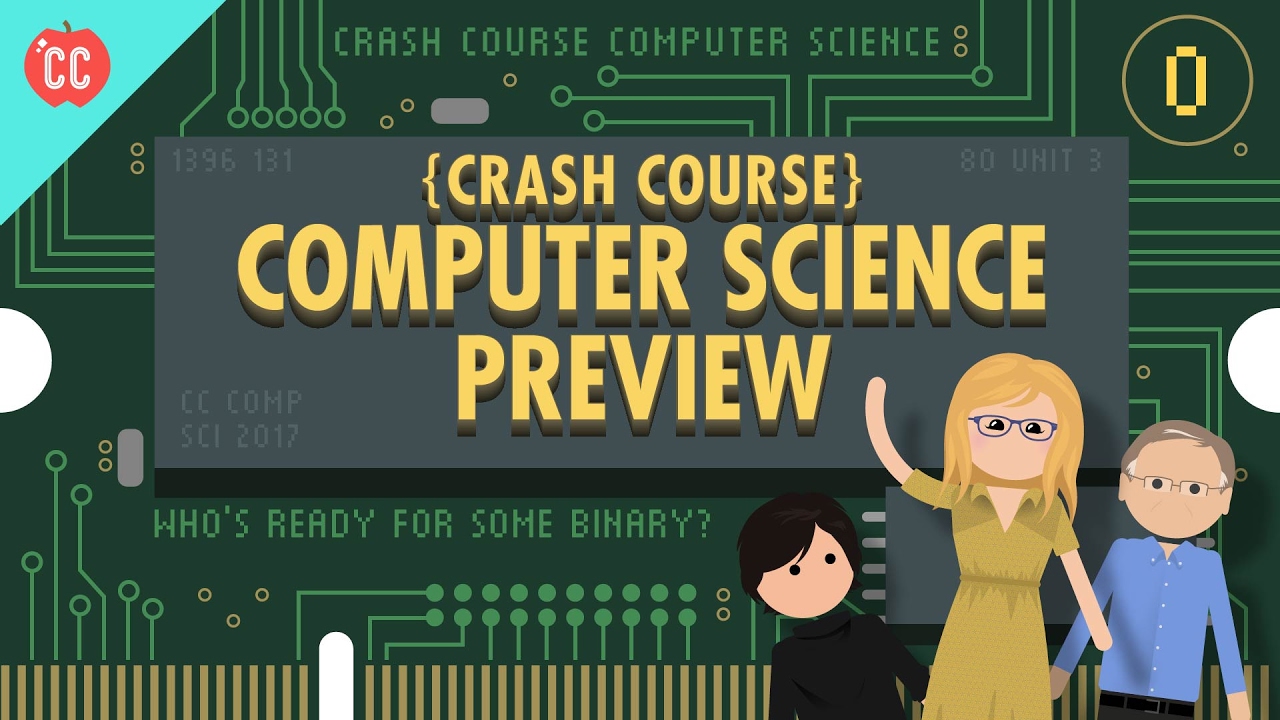
In 40 episodes, Carrie Anne Philbin teaches you computer science! This course is based on introductory college-level material as well as the AP Computer Science Principles guidelines. By the end of this course, you will be able to: *Outline the history of computers and the design decisions that gave us modern computers *Describe the basic elements of programming and software *Identify the basic components of computer hardware and what they do *Describe how computers are used and how that has evolved over time *Appreciate how far computers have come and how far they might take us
اضغط على إحدى البطاقات بالأسفل لاكتشاف المزيد من اختيارات الترفيه.
قد يعجبك أيضًا
KS2 Drama
Nursery Rhymes | Words & Sounds
JS 2 Mathematics
SS 3 Government
Discover the Art of Prompting
Talks that are perfect for procrastination
Maximize Productivity With AI Tools
Statistics
Introduction to AI
Artificial intelligence
What happens when the robots take our jobs?
Tech that can hack your brain
BEST SONGS for TODDLERS 👶🎵 (1 to 3 year olds)
Introduction to Artificial Intelligence (AI)
Bluey on CBeebies
CoComelon Lane! Brand New Netflix Kids Show!
Computer Science
Kids Songs by CoComelon
CoComelon
Alphabet (ABC) Songs by CoComelon
Use AI Responsibly
TED’s guide to your digital detox
Science and technology
Stay Ahead of the AI Curve
التعليقات
10 تعليق
Today we start a three episode arc on the rise of a global telecommunications network that changed the world forever. We’re going to begin with computer networks, and how they grew from small groups of connected computers on LAN networks to eventually larger worldwide networks like the ARPANET and even the Internet we know today. We'll also discuss how many technologies like Ethernet, MAC addresses, IP Addresses, packet switching, network switches, and TCP/IP were implemented to new problems as our computers became ever-increasingly connected. Next week we’ll talk about the Internet, and the week after the World Wide Web! Pre-order our limited edition Crash Course: Computer Science Floppy Disk Coasters here! https://store.dftba.com/products/computer-science-coasters Produced in collaboration with PBS Digital Studios: http://youtube.com/pbsdigitalstudios Want to know more about Carrie Anne? https://about.me/carrieannephilbin The Latest from PBS Digital Studios: https://www.youtube
Today we start a three episode arc on the rise of a global telecommunications network that changed the world forever. We’re going to begin with computer networks, and how they grew from small groups of connected computers on LAN networks to eventually larger worldwide networks like the ARPANET and even the Internet we know today. We'll also discuss how many technologies like Ethernet, MAC addresses, IP Addresses, packet switching, network switches, and TCP/IP were implemented to new problems as our computers became ever-increasingly connected. Next week we’ll talk about the Internet, and the week after the World Wide Web! Pre-order our limited edition Crash Course: Computer Science Floppy Disk Coasters here! https://store.dftba.com/products/computer-science-coasters Produced in collaboration with PBS Digital Studios: http://youtube.com/pbsdigitalstudios Want to know more about Carrie Anne? https://about.me/carrieannephilbin The Latest from PBS Digital Studios: https://www.youtube
Today we start a three episode arc on the rise of a global telecommunications network that changed the world forever. We’re going to begin with computer networks, and how they grew from small groups of connected computers on LAN networks to eventually larger worldwide networks like the ARPANET and even the Internet we know today. We'll also discuss how many technologies like Ethernet, MAC addresses, IP Addresses, packet switching, network switches, and TCP/IP were implemented to new problems as our computers became ever-increasingly connected. Next week we’ll talk about the Internet, and the week after the World Wide Web! Pre-order our limited edition Crash Course: Computer Science Floppy Disk Coasters here! https://store.dftba.com/products/computer-science-coasters Produced in collaboration with PBS Digital Studios: http://youtube.com/pbsdigitalstudios Want to know more about Carrie Anne? https://about.me/carrieannephilbin The Latest from PBS Digital Studios: https://www.youtube
Today we start a three episode arc on the rise of a global telecommunications network that changed the world forever. We’re going to begin with computer networks, and how they grew from small groups of connected computers on LAN networks to eventually larger worldwide networks like the ARPANET and even the Internet we know today. We'll also discuss how many technologies like Ethernet, MAC addresses, IP Addresses, packet switching, network switches, and TCP/IP were implemented to new problems as our computers became ever-increasingly connected. Next week we’ll talk about the Internet, and the week after the World Wide Web! Pre-order our limited edition Crash Course: Computer Science Floppy Disk Coasters here! https://store.dftba.com/products/computer-science-coasters Produced in collaboration with PBS Digital Studios: http://youtube.com/pbsdigitalstudios Want to know more about Carrie Anne? https://about.me/carrieannephilbin The Latest from PBS Digital Studios: https://www.youtube
In our SERIES FINALE of Crash Course Computer Science we take a look towards the future! In the past 70 years electronic computing has fundamentally changed how we live our lives, and we believe it’s just getting started. From ubiquitous computing, artificial intelligence, and self-driving cars to brain computer interfaces, wearable computers, and maybe even the singularity there is so much amazing potential on the horizon. Of course there is also room for peril with the rise of artificial intelligence and more immediate displacement of much of the workforce through automation. It’s tough to predict how it will all shake out, but it’s our hope that this series has inspired you to take part in shaping that future. Thank you so much for watching. Produced in collaboration with PBS Digital Studios: http://youtube.com/pbsdigitalstudios Want to know more about Carrie Anne? https://about.me/carrieannephilbin The Latest from PBS Digital Studios: https://www.youtube.com/playlist?list
In our SERIES FINALE of Crash Course Computer Science we take a look towards the future! In the past 70 years electronic computing has fundamentally changed how we live our lives, and we believe it’s just getting started. From ubiquitous computing, artificial intelligence, and self-driving cars to brain computer interfaces, wearable computers, and maybe even the singularity there is so much amazing potential on the horizon. Of course there is also room for peril with the rise of artificial intelligence and more immediate displacement of much of the workforce through automation. It’s tough to predict how it will all shake out, but it’s our hope that this series has inspired you to take part in shaping that future. Thank you so much for watching. Produced in collaboration with PBS Digital Studios: http://youtube.com/pbsdigitalstudios Want to know more about Carrie Anne? https://about.me/carrieannephilbin The Latest from PBS Digital Studios: https://www.youtube.com/playlist?list
In our SERIES FINALE of Crash Course Computer Science we take a look towards the future! In the past 70 years electronic computing has fundamentally changed how we live our lives, and we believe it’s just getting started. From ubiquitous computing, artificial intelligence, and self-driving cars to brain computer interfaces, wearable computers, and maybe even the singularity there is so much amazing potential on the horizon. Of course there is also room for peril with the rise of artificial intelligence and more immediate displacement of much of the workforce through automation. It’s tough to predict how it will all shake out, but it’s our hope that this series has inspired you to take part in shaping that future. Thank you so much for watching. Produced in collaboration with PBS Digital Studios: http://youtube.com/pbsdigitalstudios Want to know more about Carrie Anne? https://about.me/carrieannephilbin The Latest from PBS Digital Studios: https://www.youtube.com/playlist?list
In our SERIES FINALE of Crash Course Computer Science we take a look towards the future! In the past 70 years electronic computing has fundamentally changed how we live our lives, and we believe it’s just getting started. From ubiquitous computing, artificial intelligence, and self-driving cars to brain computer interfaces, wearable computers, and maybe even the singularity there is so much amazing potential on the horizon. Of course there is also room for peril with the rise of artificial intelligence and more immediate displacement of much of the workforce through automation. It’s tough to predict how it will all shake out, but it’s our hope that this series has inspired you to take part in shaping that future. Thank you so much for watching. Produced in collaboration with PBS Digital Studios: http://youtube.com/pbsdigitalstudios Want to know more about Carrie Anne? https://about.me/carrieannephilbin The Latest from PBS Digital Studios: https://www.youtube.com/playlist?list
Today we’re going to go a little meta and talk about how computer science can support learning with educational technology. We here at Crash Course are big fans of interactive in-class learning and hands-on experiences, but we also believe in the additive power of educational technology inside and outside the classroom from the Internet itself and Massive Open Online Courses, or MOOCs to AI driven intelligent tutoring systems and virtual reality. Produced in collaboration with PBS Digital Studios: http://youtube.com/pbsdigitalstudios Want to know more about Carrie Anne? https://about.me/carrieannephilbin The Latest from PBS Digital Studios: https://www.youtube.com/playlist?list=PL1mtdjDVOoOqJzeaJAV15Tq0tZ1vKj7ZV Want to find Crash Course elsewhere on the internet? Facebook - https://www.facebook.com/YouTubeCrash... Twitter - http://www.twitter.com/TheCrashCourse Tumblr - http://thecrashcourse.tumblr.com Support Crash Course on Patreon: http://patreon.com/crashcourse CC Kids: http
Today we’re going to go a little meta and talk about how computer science can support learning with educational technology. We here at Crash Course are big fans of interactive in-class learning and hands-on experiences, but we also believe in the additive power of educational technology inside and outside the classroom from the Internet itself and Massive Open Online Courses, or MOOCs to AI driven intelligent tutoring systems and virtual reality. Produced in collaboration with PBS Digital Studios: http://youtube.com/pbsdigitalstudios Want to know more about Carrie Anne? https://about.me/carrieannephilbin The Latest from PBS Digital Studios: https://www.youtube.com/playlist?list=PL1mtdjDVOoOqJzeaJAV15Tq0tZ1vKj7ZV Want to find Crash Course elsewhere on the internet? Facebook - https://www.facebook.com/YouTubeCrash... Twitter - http://www.twitter.com/TheCrashCourse Tumblr - http://thecrashcourse.tumblr.com Support Crash Course on Patreon: http://patreon.com/crashcourse CC Kids: http