
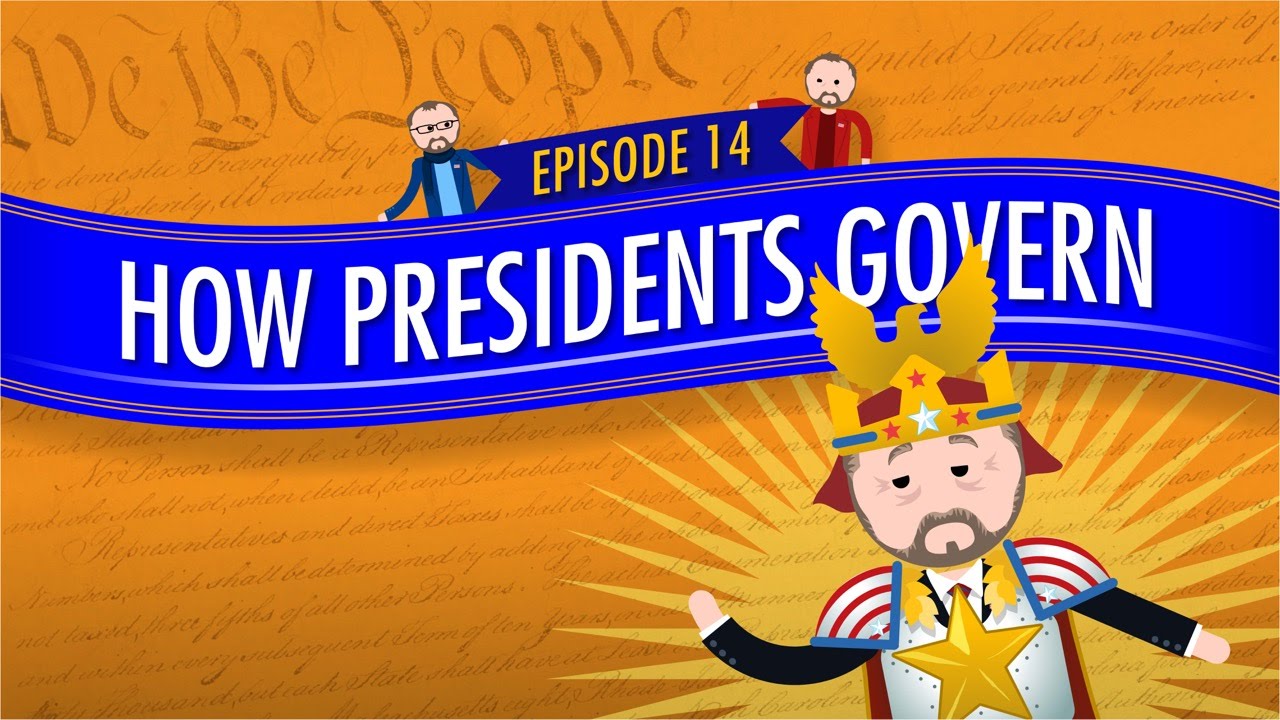
Happy Presidents Day! Use your day off to learn about the US presidency with Crash Course!
Tap a card below to continue exploring more entertainment picks.
You Might Also Like
Engineering
Political Theory
U.S. Government and Politics
A playbook to understanding power
Equality of all kinds
TED Talks on authoritarianism
10 Talks to Spark Your Democratic Spirit, Curated with Visit Philadelphia
The most actionable TED Talks
10 TED Talks on Showing Up for Democracy, Curated with Visit Philadelphia
Bikes
Smart talks for the government shutdown
🏛️ The White House & U.S. Government Fun for Kids!
Unlocking the U.S. Government & the Constitution! 📜🔑
Learn all about the White House and more
Cinco de Mayo & More: Fun Holiday Adventures! 🌮🌶️
Election Day facts and other government lessons
🏛️ Learn all about Presidents Day & More for Kids! 🎉
Constitution Day for Preschool
Holiday Learning Videos for Elementary Students
Learn all about Inauguration Day and more!
Primary 1 English
CocoMelon | Little Baby Bum | Blippi - Nursery Rhymes & Kids TV Shows
CoComelon - Happy Holidays
BabyBus | Learning Vehicles Song | Car Songs | Cars for Kids | Nursery Rhymes | Baby Cartoon
Comments
10 Comments
In which John Green teaches you about recent history. By which we mean VERY recent history. John covers the end of George W. Bush's administration presidency of Barack Obama (so far). Some people would say, "It's too soon to try to interpret the historical importance of such recent events!" To those people, we answer, "You're right." Nonetheless, it's worthwhile to take a look at the America we live in right now as a way of looking back at how far we've come. Anyway, John will teach you about Obama's election, some of his policies like the Affordable Care Act, the 2009 stimulus, and the continuation of the war on terror. If you still can't reconcile a history course teaching such recent stuff, just think of this one as a current events episode. Hey teachers and students - Check out CommonLit's free collection of reading passages and curriculum resources to learn more about the events of this episode. President Barack Obama leaned into discussions on race in his 2013 remarks on the Tra
In which John Green teaches you about recent history. By which we mean VERY recent history. John covers the end of George W. Bush's administration presidency of Barack Obama (so far). Some people would say, "It's too soon to try to interpret the historical importance of such recent events!" To those people, we answer, "You're right." Nonetheless, it's worthwhile to take a look at the America we live in right now as a way of looking back at how far we've come. Anyway, John will teach you about Obama's election, some of his policies like the Affordable Care Act, the 2009 stimulus, and the continuation of the war on terror. If you still can't reconcile a history course teaching such recent stuff, just think of this one as a current events episode. Hey teachers and students - Check out CommonLit's free collection of reading passages and curriculum resources to learn more about the events of this episode. President Barack Obama leaned into discussions on race in his 2013 remarks on the Tra
In which John Green teaches you about recent history. By which we mean VERY recent history. John covers the end of George W. Bush's administration presidency of Barack Obama (so far). Some people would say, "It's too soon to try to interpret the historical importance of such recent events!" To those people, we answer, "You're right." Nonetheless, it's worthwhile to take a look at the America we live in right now as a way of looking back at how far we've come. Anyway, John will teach you about Obama's election, some of his policies like the Affordable Care Act, the 2009 stimulus, and the continuation of the war on terror. If you still can't reconcile a history course teaching such recent stuff, just think of this one as a current events episode. Hey teachers and students - Check out CommonLit's free collection of reading passages and curriculum resources to learn more about the events of this episode. President Barack Obama leaned into discussions on race in his 2013 remarks on the Tra
In which John Green teaches you about recent history. By which we mean VERY recent history. John covers the end of George W. Bush's administration presidency of Barack Obama (so far). Some people would say, "It's too soon to try to interpret the historical importance of such recent events!" To those people, we answer, "You're right." Nonetheless, it's worthwhile to take a look at the America we live in right now as a way of looking back at how far we've come. Anyway, John will teach you about Obama's election, some of his policies like the Affordable Care Act, the 2009 stimulus, and the continuation of the war on terror. If you still can't reconcile a history course teaching such recent stuff, just think of this one as a current events episode. Hey teachers and students - Check out CommonLit's free collection of reading passages and curriculum resources to learn more about the events of this episode. President Barack Obama leaned into discussions on race in his 2013 remarks on the Tra
In which John Green teaches you about the United States as it was in the 1990s. You'll remember from last week that the old-school Republican George H.W. Bush had lost the 1992 presidential election to a young upstart Democrat from Arkansas named Bill Clinton. Clinton was a bit of a dark horse candidate, having survived a sex scandal during the election, but a third-party run by Ross Perot split the vote, and Clinton was inaugurated in 1993. John will teach you about Clinton's foreign policy agenda, which included NATO action in the Balkans and the Oslo Accords between Israel and the PLO. He'll also cover some of the domestic successes and failures of the Clinton years, including the failed attempt at healthcare reform, the pretty terrible record on GLBTQ issues, Welfare reform, which got mixed reviews, and the happier issues like the huge improvements in the economy. Also computers. Cheap, effective, readily available computers came along in the 1990s, and they kind of changed the wor
In which John Green teaches you about the United States as it was in the 1990s. You'll remember from last week that the old-school Republican George H.W. Bush had lost the 1992 presidential election to a young upstart Democrat from Arkansas named Bill Clinton. Clinton was a bit of a dark horse candidate, having survived a sex scandal during the election, but a third-party run by Ross Perot split the vote, and Clinton was inaugurated in 1993. John will teach you about Clinton's foreign policy agenda, which included NATO action in the Balkans and the Oslo Accords between Israel and the PLO. He'll also cover some of the domestic successes and failures of the Clinton years, including the failed attempt at healthcare reform, the pretty terrible record on GLBTQ issues, Welfare reform, which got mixed reviews, and the happier issues like the huge improvements in the economy. Also computers. Cheap, effective, readily available computers came along in the 1990s, and they kind of changed the wor
In which John Green teaches you about the United States as it was in the 1990s. You'll remember from last week that the old-school Republican George H.W. Bush had lost the 1992 presidential election to a young upstart Democrat from Arkansas named Bill Clinton. Clinton was a bit of a dark horse candidate, having survived a sex scandal during the election, but a third-party run by Ross Perot split the vote, and Clinton was inaugurated in 1993. John will teach you about Clinton's foreign policy agenda, which included NATO action in the Balkans and the Oslo Accords between Israel and the PLO. He'll also cover some of the domestic successes and failures of the Clinton years, including the failed attempt at healthcare reform, the pretty terrible record on GLBTQ issues, Welfare reform, which got mixed reviews, and the happier issues like the huge improvements in the economy. Also computers. Cheap, effective, readily available computers came along in the 1990s, and they kind of changed the wor
In which John Green teaches you about the United States as it was in the 1990s. You'll remember from last week that the old-school Republican George H.W. Bush had lost the 1992 presidential election to a young upstart Democrat from Arkansas named Bill Clinton. Clinton was a bit of a dark horse candidate, having survived a sex scandal during the election, but a third-party run by Ross Perot split the vote, and Clinton was inaugurated in 1993. John will teach you about Clinton's foreign policy agenda, which included NATO action in the Balkans and the Oslo Accords between Israel and the PLO. He'll also cover some of the domestic successes and failures of the Clinton years, including the failed attempt at healthcare reform, the pretty terrible record on GLBTQ issues, Welfare reform, which got mixed reviews, and the happier issues like the huge improvements in the economy. Also computers. Cheap, effective, readily available computers came along in the 1990s, and they kind of changed the wor
In which John Green teaches you about the end of the Cold War and the presidency of George H.W. Bush. It was neither the best of times nor the worst of times. On the domestic front, the first president Bush inherited the relative prosperity of the later Reagan years and watched that prosperity evaporate. That was about all the interest Bush 41 had, domestically, so let's move to foreign policy, which was a bigger deal at this time. The biggie was the end of the Cold War, which is the title of the video, so you know it's important. The collapse of the Soviet Union was the biggest deal of Bush's term, and history has assigned the credit to Ronald Reagan. We give the guy a break and say that he helped. He was certainly an expert in foreign policy, having been an envoy to China, ambassador to the United Nations, and head of the CIA. Bush also oversaw the first Gulf War, which was something of a success, in that the primary mission was accomplished, and the vast majority of the troops were
In which John Green teaches you about the end of the Cold War and the presidency of George H.W. Bush. It was neither the best of times nor the worst of times. On the domestic front, the first president Bush inherited the relative prosperity of the later Reagan years and watched that prosperity evaporate. That was about all the interest Bush 41 had, domestically, so let's move to foreign policy, which was a bigger deal at this time. The biggie was the end of the Cold War, which is the title of the video, so you know it's important. The collapse of the Soviet Union was the biggest deal of Bush's term, and history has assigned the credit to Ronald Reagan. We give the guy a break and say that he helped. He was certainly an expert in foreign policy, having been an envoy to China, ambassador to the United Nations, and head of the CIA. Bush also oversaw the first Gulf War, which was something of a success, in that the primary mission was accomplished, and the vast majority of the troops were